
Breast Implants Through the Years
Breast Augmentation remains one of the most commonly performed cosmetic procedures worldwide. While many patients focus on implant size, far fewer realise how significantly breast implant technology has evolved over the decades.
Modern breast implants are the result of more than sixty years of research, innovation, and refinement. Understanding how implants have changed over time can help patients appreciate why implant selection is about far more than simply choosing a size.
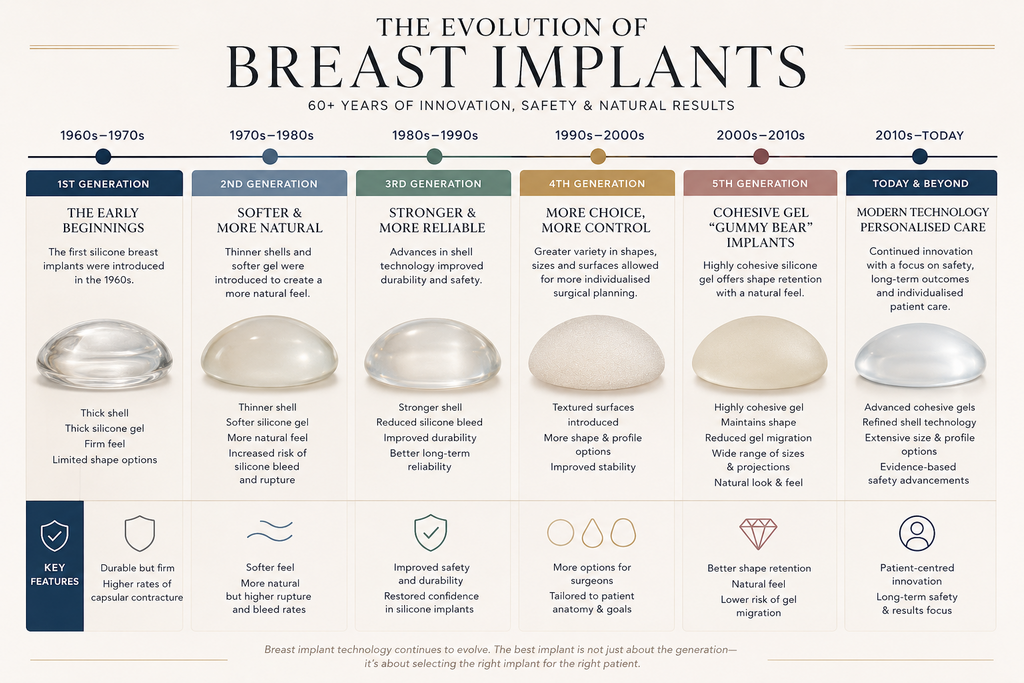
A Brief History of Breast Implants
The first silicone breast implants were introduced in the early 1960s. Since then, manufacturers have continually refined implant design to improve safety, durability, and aesthetic outcomes.
Each new generation of implants sought to address limitations identified in earlier designs, resulting in the sophisticated devices available today.
How are Modern day Implants (5th Generation)
Today's implants are often referred to as highly cohesive silicone gel implants or "gummy bear" implants. These devices contain a more cohesive silicone gel that maintains its shape while still feeling soft and natural.
Benefits include:
Improved Shape Retention
Reduced Gel Migration
Enhanced Durability
Wide range of profiles and dimensions
Natural feel and appearance
These implants represent the most advanced generation currently available.
Round vs Anatomical Implants
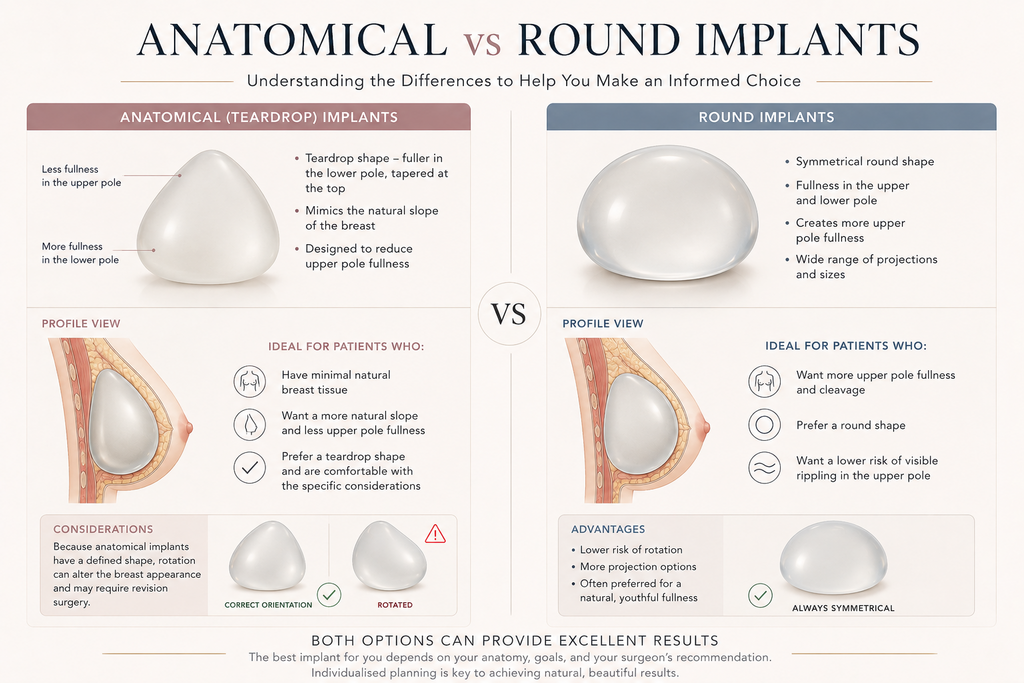
Modern implant selection extends beyond generation alone. Round implants remain the most commonly used implants worldwide, as they offer excellent upper pole fullness, lower risk of shape distortion, a wider range of sizes and projections and a more natural look and feel.
There are a select set of patients who will benefit from an anatomical-shaped implant, these are designed as a teardrop shape and mimic the shape of the natural breast, therefore giving increased projection in the lower pole. However, because they have a defined shape, rotation can alter breast appearance and may occasionally require revision surgery.
Modern surgeons increasingly favour appropriately selected round implants because contemporary cohesive gel technology often produces a more natural looking result.
Smooth vs Textured Implants
Implants also differ in their surface characteristics. Smooth implants tend to move more freely within the pocket and remain widely used around the world. Textured implants were later developed to decrease the rates of capsular contracture and improve implant stability. The modern implants try to combine the best of both worlds and use micro or nano texturing on the implant surface.

Final Thoughts
Breast implants have evolved considerably since their introduction in the 1960s. Modern implants are safer, more durable, and more versatile than ever before.
Understanding the different generations of implants highlights how far breast augmentation technology has progressed and reinforces the importance of individualised implant selection.
At WHC Plastic Surgery, breast augmentation planning focuses on proportion, anatomy, and long-term outcomes to help achieve natural, balanced, and enduring results.

Copyright WHC Plastic Surgery. All rights reserved