
Non-healing Wound: When Healing needs Surgical Help
Not all wounds heal as expected.
While most surgical incisions and traumatic injuries follow a predictable healing process, some wounds persist for weeks or months. When this happens, it is no longer simply a matter of time - it may require specialist assessment.
A chronic wound is generally defined as a wound that fails to progress through normal stages of healing within an expected timeframe.

Why do some wounds fail to heal
Wound healing is a complex biological process involving blood supply, tissue oxygenation, immune response, and mechanical stability. When one ore more of these factors are compromised, healing slows or stalls.
Common contributing factors include:
Diabetes
Poor circulation
Infection
Repeated Trauma or pressure
Smoking
Poor Nutrition
Previous Radiation therapy
In some cases, underlying medical conditions may be undiagnosed until wounds fail to improve.
When should you be concerned
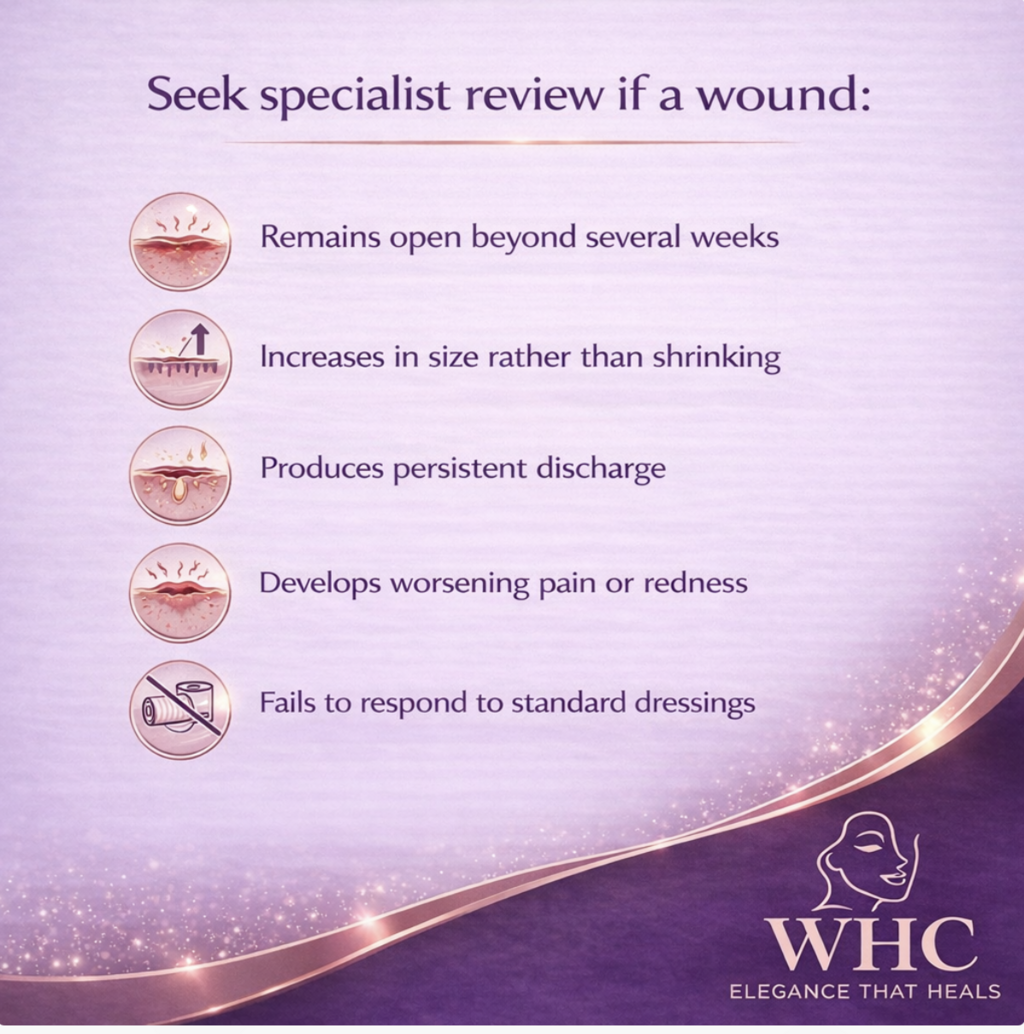
Seek a specialist review if a wound:
Remains open beyond several weeks
Increases in size rather than shrinks
Produces persistent discharge
Develops worsening pain or redness
Fails to respond to standard dressings
Early intervention often prevents further tissue loss and more complex reconstruction.
How can a Plastic Surgeon help
Plastic Surgeons are trained in advanced wound management and tissue reconstruction. These may include:
Debridement - Removal of non-viable tissue to stimulate healthy healing
Infection control - Targeted therapy if infection is contributing to delayed wound healing
Optimising blood supply - Assessment of circulation and coordination with other specialists if required
Surgical reconstruction - Skin grafts, local flaps regional tissue rearrangement
The goal is not only to close the wound, but restore durable, functional tissue coverage
Function and long term stability
Closing a wound is not the same as achieving a stable result.
In areas such as lower limb, scalp, or over joints, careful planning is essential to prevent recurrence, breakdown or functional limitation.
A reconstructive approach considers:
Tissue quality
Tension across the wound
Movement in affected area
Long term durability
Chronic wounds often become more complex over time. Early specialist assessment may reduce the need for more extensive surgery later. If a wound is not progressing, it is important not to simply say "wait and see". Appropriate intervention can significantly improve outcomes.
Final Thoughts
Chronic wounds are not merely cosmetic concerns - they can impact mobility, quality of life, and overall health.
With proper evaluation and reconstructive planning, even complex wounds can often be successfully managed.
At WHC Plastic Surgery, wound care and reconstruction are approached with the same precision, planning, and attention to detail as any other surgical procedure.
If you are concerned about a wound not healing, consultation allows for a structured assessment and personalised treatment plan.
Copyright WHC Plastic Surgery. All rights reserved